Wednesday, September 30, 2020

Vondom Grows Its Commitment to Sustainability With the Ibiza Collection

Vondom Grows Its Commitment to Sustainability With the Ibiza Collection

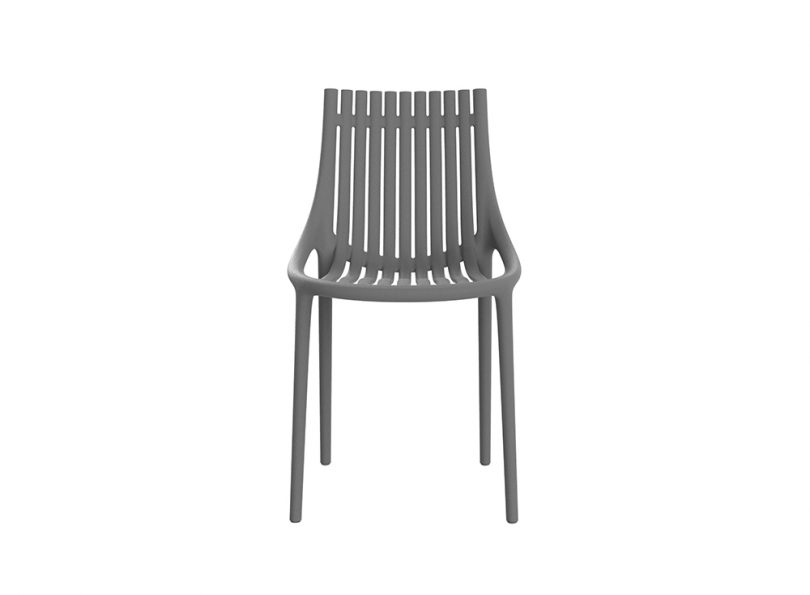
Spanish brand Vondom’s sustainable Ibiza outdoor collection was designed by Eugeni Quitllet. Ibiza was actually inspired directly by Quitllet’s childhood spent on the island. The sea breeze, a feeling of freedom, the sun on skin and the Mediterranean Sea were all influences in his chair designs. You’ll notice Ibiza includes plenty of wave-shapes that imitate seashells, too. As we often say, these furniture pieces are made for the outdoors but would look just as good inside your home.

Each chair in Ibiza is manufactured with recycled plastic from the Mediterranean, the first collection to be part of Vondom’s Revolution. This renews their commitment to sustainability, as well as with the eco-smart furniture industry of the future. This ethos is what Vondom hopes to leave behind as their legacy in the world of design.

To learn more about the Ibiza collection, visit vondom.com.

via http://design-milk.com/


from WordPress https://connorrenwickblog.wordpress.com/2020/09/30/vondom-grows-its-commitment-to-sustainability-with-the-ibiza-collection/

Tuesday, September 29, 2020

A “Monastically Inspired” Workspace Designed for One

A “Monastically Inspired” Workspace Designed for One

If social media is any indicator, Autonomous’ popularity for affordable and contemporary home office goods has spiked noticeably in recent months. But while a comfortable office chair, desk, and task lighting offer a mandatory baseline in regards to daily WFH needs, the announcement of the Zen Work Pod presents significantly higher (and aspirational) tier, addressing the possibility of working remotely indefinitely.

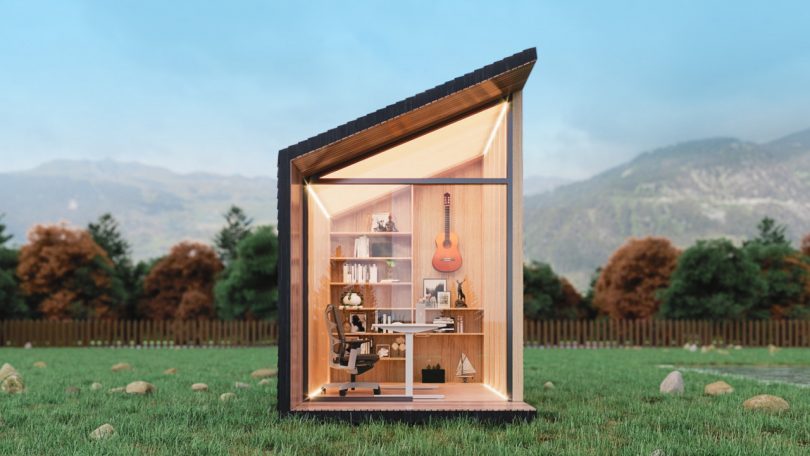
Imagine a minimalist-designed 68-square-oot shed upgraded with the finishes and amenities of a modern detached home office, all appointed with built-in shelving and a coordinating automated standing desk and chair – a space to check-in…and perhaps check out from the distractions of the household for working or working out. That’s the entirety of the premise behind the Zen Work Pod.

Aimed at “creators and freelancers” (not to mention homeowners with a backyard to call their own), the “monastically-inspired design” is just large enough for one person to work within, a prefabricated design that arrives in a 20-foot container and only requires 72 hours to assemble. “Ommm” not included.

The Zen Work Pod construction is comprised in a 4-layer design: a faux wood plastic composite exterior, a soft coal waterproofing layer underneath, and insulation foam covering a steel frame with tempered glass walls finishing up the exterior. The construction is covered by a 5-year warranty, and can be situated on “soil, brick, concrete, gravel, patio, grass area” all without any ground fixtures.

The design also incorporates electrical wiring to plug into an outdoor wire connecting to an existing power source from your home, which may entail requiring a permit(s) in some jurisdictions.

Autonomous has already pre-sold a limited quantity units at $5,400, with prices increasing incrementally all the way up to $14,900 – no small amount, but arguably, for some a worthwhile investment if our temporary solutions must adapt to become a permanent one.

via http://design-milk.com/


from WordPress https://connorrenwickblog.wordpress.com/2020/09/29/a-monastically-inspired-workspace-designed-for-one/

Alessi Reissues the Practical, Stylish Plico Trolley Cart

Alessi Reissues the Practical, Stylish Plico Trolley Cart

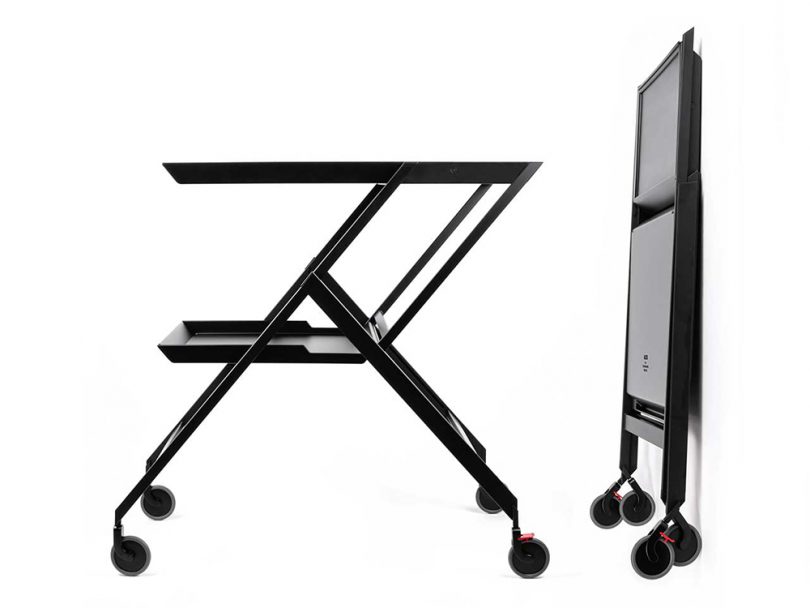
Originally designed by Richard Sapper, the elegant black PLICO trolley cart has been reissued by Alessi. The highly flexible construction of this piece of furniture can be folded flat and stored, a covetable trait in today’s small space-loving society. Featuring two shelves, the polyurethane and a steel frame trolley is easily maneuverable. One easy movement flips the top, turning it into a bedside table or work surface. Its versatility makes PLICO adaptable to virtually any space.

Alberto Alessi, President of Alessi, recalls, “I first met Richard Sapper in the winter of 1977. He had been suggested to me by Ettore Sottsass like this: ‘He’s the one who designed the TIZIO lamp, the one who hasn’t done a wrong project yet’. I knew him for the TIZIO lamp, of course, and for a beautiful folding trolley that he had just designed, PLICO, which had impressed me for the designer’s creative mastery.”

Richard Sapper and Alessi have collaborated on many projects, such as the 9090 espresso maker, 9091 water kettle, TODO cheese grater and the LA CINTURA DI ORIONE cookware, all are available at Alessi.

To learn more about the PLICO trolley cart, visit alessi.com.

via http://design-milk.com/


from WordPress https://connorrenwickblog.wordpress.com/2020/09/29/alessi-reissues-the-practical-stylish-plico-trolley-cart/

Wick Is Today’s Version of Portable Candlelight

Wick Is Today’s Version of Portable Candlelight

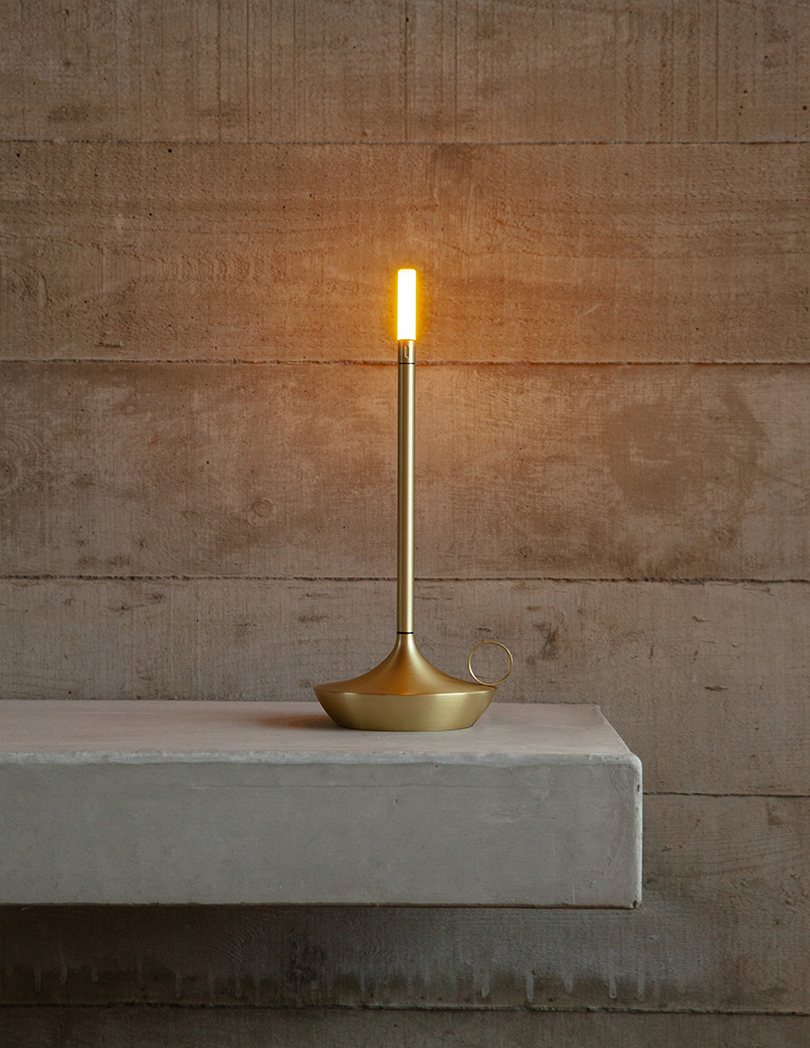
While candlelight is no longer a necessity of life, Wick is the modern interpretation of it. Graypants Studio, based in Seattle and Amsterdam, has created this energy-efficient portable LED fixture that’s ready to go everywhere with you. With no cord, plug, or flame, Wick can travel from home to campsite, ready to set the mood and humanize the everyday moments that happen in life.

The fixture’s aluminum body is plated in satin brass, with a carrying ring similar to that of classic candleholders. Wick can last up to one hundred hours per charge, and features a touch sensor control, three lighting levels and a pulse mode that mirrors the flicker of a real candle. When it loses its shine, simply recharge the internal USB-C battery. Wick’s brightness reaches levels both suitable for reading and relaxing, but without the threat of fire so it’s safe for kids as well.

>>> Wick sells for $149 and is available in the Design Milk Shop here! <<<

via http://design-milk.com/


from WordPress https://connorrenwickblog.wordpress.com/2020/09/29/wick-is-todays-version-of-portable-candlelight/

Circular by Design: Yair Neuman Turns Waste Eyewear Lenses into Lighting Collection

Circular by Design: Yair Neuman Turns Waste Eyewear Lenses into Lighting Collection

Yair Neuman is a London-based designer and entrepreneur, exploring sustainable design opportunities, while minimizing the environmental impact of everything he produces and conceives. His most recent collection was developed in collaboration with eyewear brand Cubitts. As with most eyewear stores, Cubitts’ frames are displayed with dummy ‘plano’ lenses that are replaced with prescription lenses once purchased by the customer. The average high-street eyeglasses store discards 200 such lenses every week. Neuman is turning these lenses, otherwise destined for landfill, into polycarbonate sheet materials, from which he has created a striking lighting collection called Lens Light, recently launched during the London Design Festival.

Tell me a little bit about your childhood, education and background in terms of how you first became interested in creativity, design and sustainability.

My jeweler mother, with her artistic view, and my surgeon father, with his practical precision, provided me with a good balance of creativity versus execution to start with. Then studying design in Eindhoven and in London has helped me build my practice around sustainability, which is common to the majority of designers in my age group. I just don’t think there is any other way.

How would you describe your Lens Light collection?

The collection is a representation of many labor hours and represents just the first page of a story about waste in the eyewear industry. It also shows that there are great brands like Cubitts, with whom I collaborated for this collection, that are working towards a real change.

What inspired this project?

The first time I worked on eyewear pieces was at Ron Arad’s brand pq in 2010. Being involved in the industry on and off since then I witnessed wastage that is hidden from the costumer’s eye. This project started when I realised there was an opportunity to use that waste as free, high-quality material that I could repurpose into something else.

What waste materials is the collection made from, how did you select those particular materials and how do you source them?

The most polluting part of eyewear making is the lens waste. This is what I work with and use to create my pieces from. All the clear display lenses installed in eyewear frames in shops are replaced with consumers’ prescription lenses when the frames are sold. Despite being made out of optical grade polycarbonate, these clear display lenses are essentially disposable and go straight to landfill. The nice thing I have discovered is that if an optician or store is willing to collaborate and keep these lenses for me, all I need to do is to collect them and transform them into something else. It is a simple supply chain.

When did you first become interested in using waste as raw material and what motivated this decision?

The general feeling in the design circles I move in is that we’ve taken enough out of this poor little planet. We have dug, cut, pumped and extracted for generations. There is, of course, some value in processing virgin materials, but with so much that can be reclaimed, repurposed and upcycled, sometimes it just makes more sense to do that, no?

What processes does the waste material have to undergo to become the finished product?

I start by composing patterns using the lenses’ original shapes and then flatten them either individually or fused into sheets, depending on the designed piece. Then I use a combination of heat, pressure, jigs, moulds and freehand sculpting to create the final designs.

How did you feel the first time you saw the transformation from waste material to product/prototype?

This is such a good question as that very moment was probably the most inspiring moment in the work. This usually happens in projects, I find, and if the feeling is positive enough it can really help to overcome hurdles later on in the process and carry the project all the way to completion.

What happens to the product at the end of its life? Can it go back into the circular economy again?

Making objects that are mostly static, such lamps works well with the delicacy of the material and supports longevity. At the very end of the product’s life, there will still be the problem of not being able to recycle large plastic objects easily. However, I’m hoping to collaborate with other makers who specialise in processing rougher plastic parts into raw material that could be repurposed the lamps. Some of them already operate in the UK.

How have people reacted to this project?

It’s very reassuring that many people from within the industry are reaching out to me as a result of seeing the work. It shows that the time is right for a change and the professional world is ready for it.

How do you feel opinions towards waste as a raw material are changing?

I notice it’s a topic of conversation and sometimes people are proud to have something made out of waste material. My hope is that over time it will just become common sense rather than being something special.

What do you think the future holds for waste as a raw material?

Production facilities are becoming increasingly automated, which is allowing for detailed control over each step of the process. I can already start to see how this will enable producers to separate, control and reintroduce waste back into the system, overcoming logistical challenges that we’ve been struggling with so far.


advertisement for wasted by katie treggiden

via http://design-milk.com/


from WordPress https://connorrenwickblog.wordpress.com/2020/09/29/circular-by-design-yair-neuman-turns-waste-eyewear-lenses-into-lighting-collection/